Case Study
360 Jet Fuel Fuel pricing, procurement, and ground handling operations platform
Helping a global aviation services company replace fragmented, email-driven coordination with a structured operational system for fuel pricing, procurement, and ground handling — while enabling a new handling revenue stream.
100s
vendors coordinated through the operational model
9
months to initial launch
1000s
airports covered by the operational context
Overview
Designing for a complex aviation business
360 Jet Fuel is a global aviation services company specializing in fuel procurement for business aviation operators. With a distributed team working remotely across multiple regions, the company coordinates services across hundreds of vendors and thousands of airports worldwide.
As the company grew, internal workflows built around email, spreadsheets, and manual coordination became increasingly hard to manage. At the same time, the business wanted to expand into ground handling services in addition to fuel procurement.
Happy Path Solutions partnered with 360 Jet Fuel and development partner Kombinat to design and deliver a platform that could support operational scale, reduce coordination overhead, and enable this expansion.
The Challenge
Manual coordination had become a business constraint
The company’s operations were largely coordinated through email threads and shared spreadsheets. While this approach worked early on, it became increasingly fragile as the business grew.
- Requests from clients were difficult to track across teams and inboxes.
- Operational coordination depended on significant manual effort and tribal knowledge.
- Fuel pricing calculations were complex, high-stakes, and prone to mistakes.
- Growth depended too much on adding people instead of improving systems.
Fuel pricing alone involved multiple layers of complexity, including tiered pricing structures, airport-specific differentials, layered fee and tax structures, and SAF surcharges.
At the same time, the company wanted to launch a new revenue stream: ground handling services. Doing so required a system capable of coordinating vendors, tracking requests, and supporting operations across hundreds of airports.
Discovery & Product Framing
Building on a shared understanding of a complex domain
The project began with intensive discovery sessions involving the client’s core team. Because non-scheduled aviation services are a highly specialized domain, the first step was understanding the operational environment, terminology, and workflows involved in fuel procurement and ground handling.
From these sessions we created:
This foundation aligned the client team, Happy Path Solutions, and our development partner Kombinat around a shared understanding of the system.
Field Insights
Designing for work that happens under real operational conditions
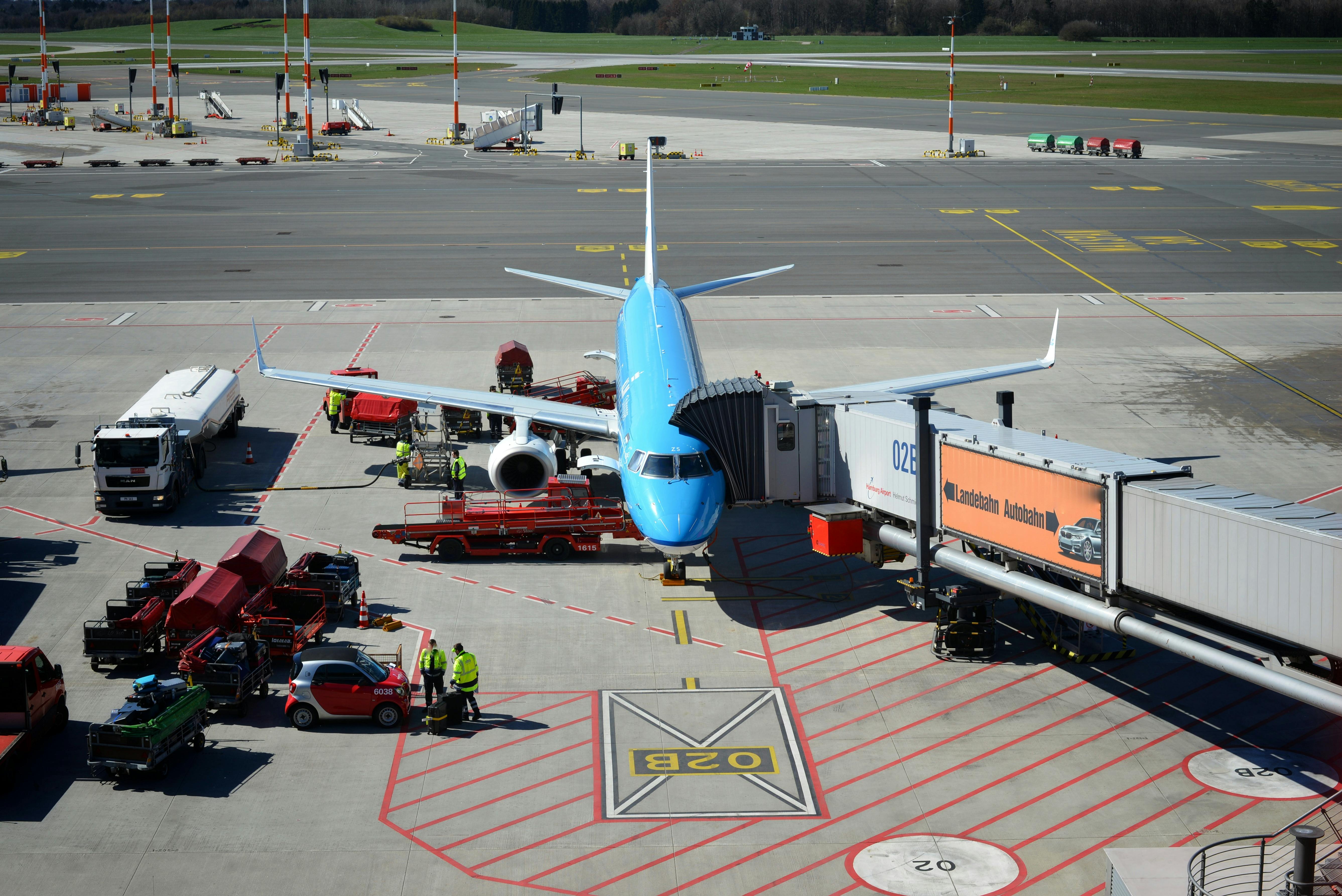
To better understand the vendor side of the operation, we visited one of the ground handling vendors operating at an airport.
- Ground handling operations happen under significant time pressure.
- They happen outdoors on airport ramps.
- Multiple services are delivered during a single aircraft turnaround.
Design response
- higher contrast UI for outdoor visibility
- fewer vendor-facing configuration choices
- complexity shifted to the internal operations team
- support for multiple confirmations in one turnaround window
Product Design
Validating critical workflows before high-fidelity delivery
The design process began with low-fidelity mockups tested with three users from the client’s internal team who would later use the system daily. These usability sessions allowed us to iterate quickly and refine the core workflows.
Once the main flows were validated, we created a high-fidelity prototype in Figma covering the overall platform structure and the most important user journeys. This prototype served as the shared blueprint for development.
Platform Structure
Two modules supporting one operational system
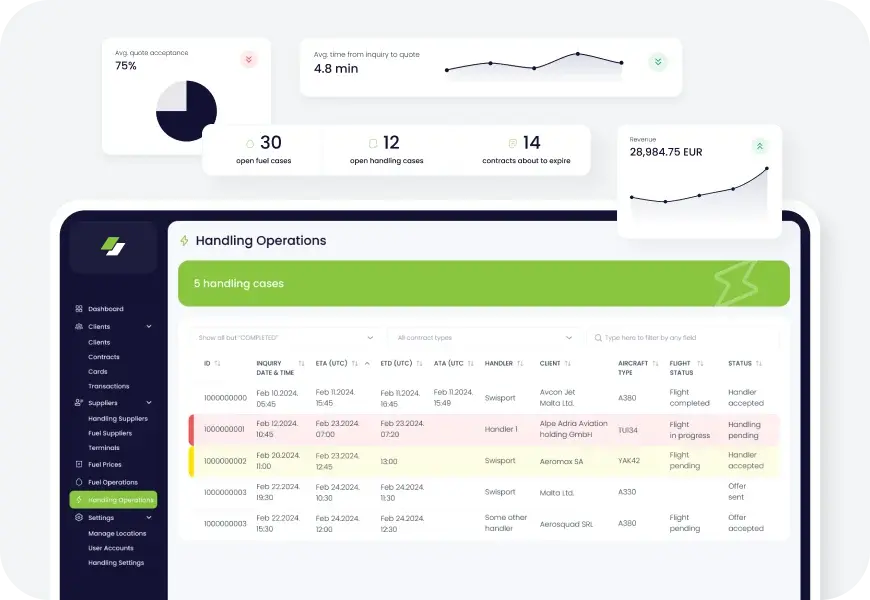
Handling Module
Developed first to enable the launch of ground handling services.
- vendor management and contracts
- pricing and service configuration
- request lifecycle management
- operational reporting
A vendor terminal and client identification system using cards allows vendors to identify clients and authorize transactions quickly during aircraft servicing.
Fuel Module
Extended the platform to support fuel procurement operations.
- supplier contracts and pricing structures
- automated pricing calculation
- sales and client contract management
- request handling and reporting
The system automates complex fuel pricing calculations involving tiered pricing, differentials, and multiple fee structures.
Delivery Process
A distributed team working in tight feedback loops
The project was delivered through close collaboration between Happy Path Solutions, Kombinat, and the client team.
Happy Path Solutions
Product Management & UX Design
UI Design
Quality Assurance
Kombinat
Software Architecture
Three full-stack engineers
We worked as a distributed team with daily alignment meetings between Happy Path and Kombinat. Progress was tracked using a Kanban workflow, and we held weekly meetings with the client team to review progress and align priorities.
All collaboration happened remotely, using recorded video meetings and transcripts to ensure clarity and shared understanding.

Their eye for detail and willingness to understand the requirements thoroughly before designing and developing our platform were key reasons for the successful launch of our product.

Pablo Fexer
CEO, 360 Jet Fuel
Outcome
A platform that enabled operational scale and service expansion
The handling module was completed first and enabled 360 Jet Fuel to launch its ground handling service offering. More importantly, the platform moved core operations from fragmented email-driven coordination into a structured system with clearer workflows, better visibility, and stronger operational control.
The full platform was developed over approximately nine months. After the fuel module reached about 80% completion, the system was handed over to the client’s internal development team, who continue to develop and maintain the platform.
The platform has remained in active production use for well over 15 months.
Key Insights
What this project reinforced about complex operational software
Operational complexity requires purpose-built systems.
Email-based workflows quickly collapse under scale when coordinating hundreds of vendors and airports.
Pricing automation is critical.
Fuel transactions involve complex pricing structures that must be calculated consistently and accurately.
Vendor experience matters.
Systems used in airport environments must be designed for real operational conditions.
Credits
The teams behind the platform
Client
360 Jet Fuel
Product Design & Product Management, QA
Happy Path Solutions
Development Partner
Kombinat